
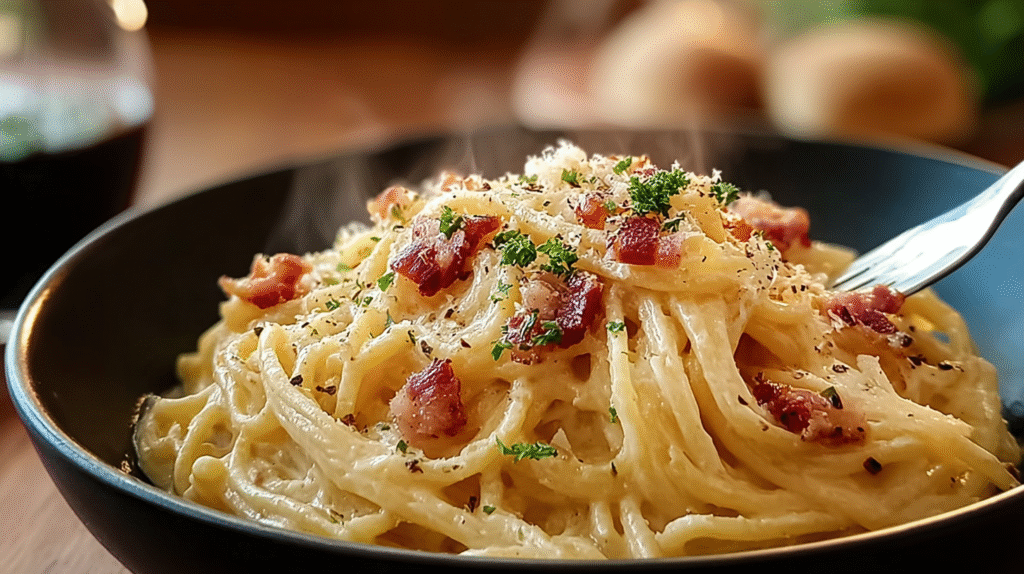
I’ll never forget the first time I truly messed up carbonara. I was trying to impress someone—let’s just say the evening mattered—and I turned what should have been silky, luxurious pasta into something resembling scrambled eggs with noodles. The heat was too high, I panicked, and the eggs seized up before I could blink. We laughed it off, ordered pizza, and I promised myself I’d figure this out. Fast forward a few attempts, and now Bacon Carbonara Pasta is one of those dishes I can pull together on autopilot, even after a long day. It’s deceptively simple: just a handful of ingredients and about 25 minutes from start to finish. But getting that sauce glossy and coating every strand of pasta without a single lump? That’s where the magic happens, and honestly, it’s easier than you’d think once you know the tricks.
What makes this version special is the bacon. Traditional carbonara uses guanciale or pancetta, but thick-cut bacon brings this smoky, slightly sweet depth that feels a bit more approachable, especially if you’re not near an Italian deli. The rendered fat becomes the base of the sauce, mingling with sharp Parmesan and creamy eggs to create something that clings to the pasta like a velvety hug. There’s no cream here—just eggs, cheese, pasta water, and a little patience. When it comes together, each bite is rich without being heavy, smoky without overpowering, and perfectly balanced by a generous crack of black pepper.
Gathering Your Ingredients
One of the best things about Bacon Carbonara Pasta is how short the shopping list is. You’re not hunting down specialty items or stocking up on a dozen spices. Quality matters here more than quantity, though. Fresh eggs at room temperature blend more smoothly into the sauce, and real Parmesan—not the pre-grated stuff in a can—makes all the difference in flavor and texture. Thick-cut bacon crisps up beautifully and releases enough fat to coat the pasta, so don’t skimp on that.
- Spaghetti: The traditional choice, though linguine or fettuccine work just as well
- Thick-cut bacon: Provides smoky richness and the fat needed for the sauce
- Large eggs: Room temperature is key for smooth emulsification
- Freshly grated Parmesan cheese: Sharp, nutty, and essential for authentic flavor
- Garlic: Optional, but adds a subtle aromatic layer
- Freshly cracked black pepper: The classic carbonara spice—don’t use pre-ground
- Reserved pasta water: Starchy liquid that helps create the silky sauce texture
- Salt: For the pasta water
Making the Sauce Come Together
Start by bringing a large pot of salted water to a rolling boil. The water should taste like the sea—this is your only chance to season the pasta itself. Drop in your spaghetti and cook until it’s al dente, with just a slight bite when you test it. Before you drain, scoop out at least a cup of that starchy pasta water. It’s the secret ingredient that turns your egg mixture into a smooth, cohesive sauce instead of a clumpy mess.
While the pasta cooks, heat a large skillet over medium heat and add the chopped bacon. Let it sizzle and render its fat, stirring occasionally until the pieces turn golden and crispy. This takes about six to eight minutes. Once done, transfer the bacon to a paper towel-lined plate, but leave about two tablespoons of that rendered fat in the skillet. If you’re using garlic, toss it in now and let it sauté for just 30 seconds—long enough to release its aroma without burning. Then take the skillet off the heat.
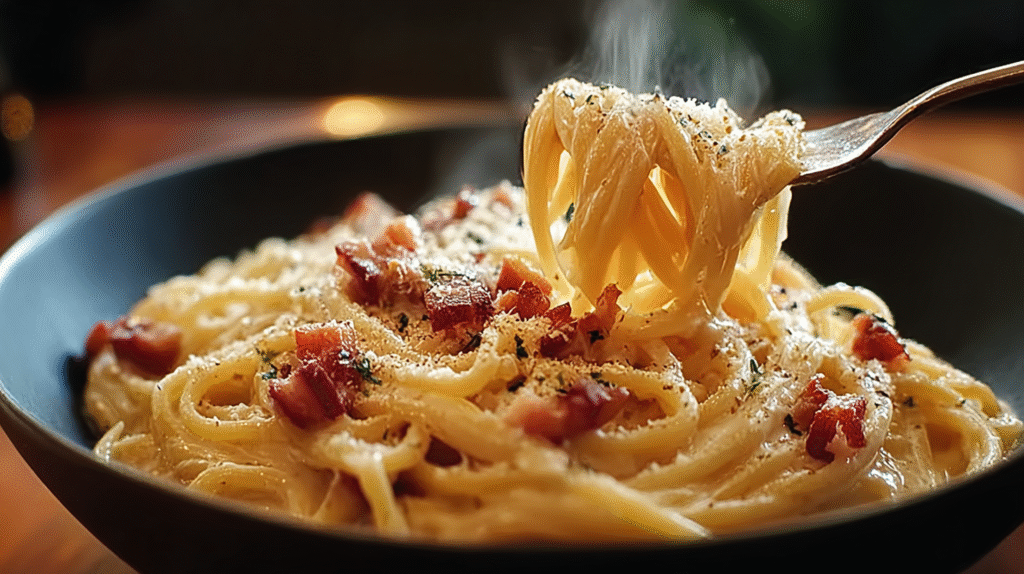
In a mixing bowl, whisk together the eggs, grated Parmesan, and a generous amount of black pepper. The mixture should look thick and pale yellow. When your pasta is ready, drain it and immediately add it to the skillet with the bacon fat. Toss everything together so the pasta gets coated in that smoky goodness. Here’s the crucial part: turn off the heat completely. Pour the egg mixture over the pasta and stir quickly and constantly. The residual heat from the pasta will gently cook the eggs, creating a creamy sauce that clings to every strand. If it looks too thick, add the reserved pasta water a splash at a time until you reach that glossy, smooth consistency.
Pro Tips for Perfect Results
- Always use room temperature eggs—they blend more easily and reduce the risk of clumping
- Turn off the heat before adding the egg mixture to prevent scrambling
- Stir vigorously and quickly when combining the eggs and pasta
- Don’t skip the pasta water—it’s essential for a silky sauce
- Freshly grated Parmesan melts better and tastes sharper than pre-shredded cheese
- Cook the pasta just until al dente; it’ll continue cooking slightly when tossed with the sauce
Creative Variations to Try
Once you’ve mastered the classic, Bacon Carbonara Pasta is a great canvas for experimenting. Swap the bacon for pancetta or guanciale if you want to go more traditional. Some people love adding sautéed mushrooms for an earthy note, or tossing in frozen peas right at the end for a pop of color and sweetness. Grilled chicken turns it into a more substantial main course, and a handful of fresh spinach wilted into the hot pasta adds a bit of green without changing the flavor profile too much.
For a lighter version, you can use turkey bacon and reduce the amount of cheese slightly, though the sauce won’t be quite as rich. If you’re feeding someone who doesn’t eat pork, smoked salmon or even crispy prosciutto can work in a pinch. Just remember that the beauty of carbonara lies in its simplicity, so whatever you add should complement rather than compete with the core flavors.
Troubleshooting Common Mistakes
- Eggs scrambling: This happens when the heat is too high. Always remove the skillet from the burner before adding the egg mixture
- Sauce too thick: Add more pasta water, a tablespoon at a time, stirring constantly until it loosens up
- Sauce too thin: Let it sit for a minute off the heat—it will thicken as it cools slightly
- Clumpy cheese: Make sure you’re using freshly grated Parmesan, not pre-shredded, which often contains anti-caking agents
- Bland flavor: Taste and adjust—sometimes you need more black pepper or a pinch of salt
- Pasta sticking together: Toss it immediately with the bacon fat to keep the strands separate
Smart Ingredient Substitutions
If you can’t find thick-cut bacon, regular bacon works fine—you’ll just need a bit more to get enough rendered fat. Pecorino Romano can stand in for Parmesan if you want a sharper, saltier flavor. Some cooks use a mix of both cheeses for more complexity. In a pinch, you can substitute linguine, fettuccine, or even rigatoni for the spaghetti, though the sauce clings differently to each shape.
For a vegetarian twist, skip the bacon entirely and use a good quality olive oil with sautéed garlic and maybe some smoked paprika to mimic that smoky depth. It won’t be traditional carbonara, but it’s still delicious. Gluten-free pasta works too, though you may need a bit more pasta water since some gluten-free varieties don’t release as much starch.
Storage and Reheating Tips
Bacon Carbonara Pasta is really best enjoyed fresh, right after you make it. The sauce is at its silkiest when it’s just been tossed together, and reheating can sometimes cause the eggs to separate or the texture to turn grainy. That said, if you do have leftovers, store them in an airtight container in the fridge for up to two days.
When you’re ready to reheat, do it gently. Place the pasta in a skillet over low heat and add a splash of water or milk to help bring the sauce back together. Stir constantly until it’s warmed through. Avoid the microwave if you can—it tends to cook the eggs unevenly and can make the pasta rubbery. If the sauce looks broken or dry, a little extra Parmesan and a drizzle of olive oil can help salvage it.
Frequently Asked Questions
Can I use a different type of pasta?
Absolutely. Spaghetti is traditional, but fettuccine, linguine, bucatini, or even penne all work well with Bacon Carbonara Pasta. The sauce will coat different shapes in unique ways, so feel free to experiment.
Do I really need to use room temperature eggs?
Yes, it makes a noticeable difference. Cold eggs are more likely to seize up when they hit the warm pasta, which can result in a clumpy sauce. Letting them sit out for 15 to 20 minutes before you start cooking is an easy step that pays off.
Can I make this dish ahead of time?
Carbonara really shines when it’s freshly made. The texture and creaminess don’t hold up well over time. If you’re planning for a dinner party, you can prep the bacon and grate the cheese ahead, but toss everything together right before serving.
What if I don’t have pasta water?
Pasta water is crucial because the starch helps emulsify the sauce. If you forget to save it, you can use a bit of regular water or even a splash of milk in a pinch, though the results won’t be quite as silky.
Is there a dairy-free version of this recipe?
It’s tricky, since Parmesan is such a key flavor. You can try using a dairy-free Parmesan substitute and nutritional yeast, but the taste and texture will be different. The eggs are essential to the sauce, so you’d also need a plant-based alternative that can emulsify.
How do I prevent the bacon from becoming chewy?
Cook it low and slow over medium heat, giving the fat time to render out. If the heat is too high, the bacon can crisp up on the outside while staying chewy inside. Patience is key.
Can I freeze Bacon Carbonara Pasta?
Freezing isn’t recommended. The egg-based sauce doesn’t freeze and thaw well—it tends to separate and become watery. If you want to meal prep, cook the components separately and assemble fresh when you’re ready to eat.
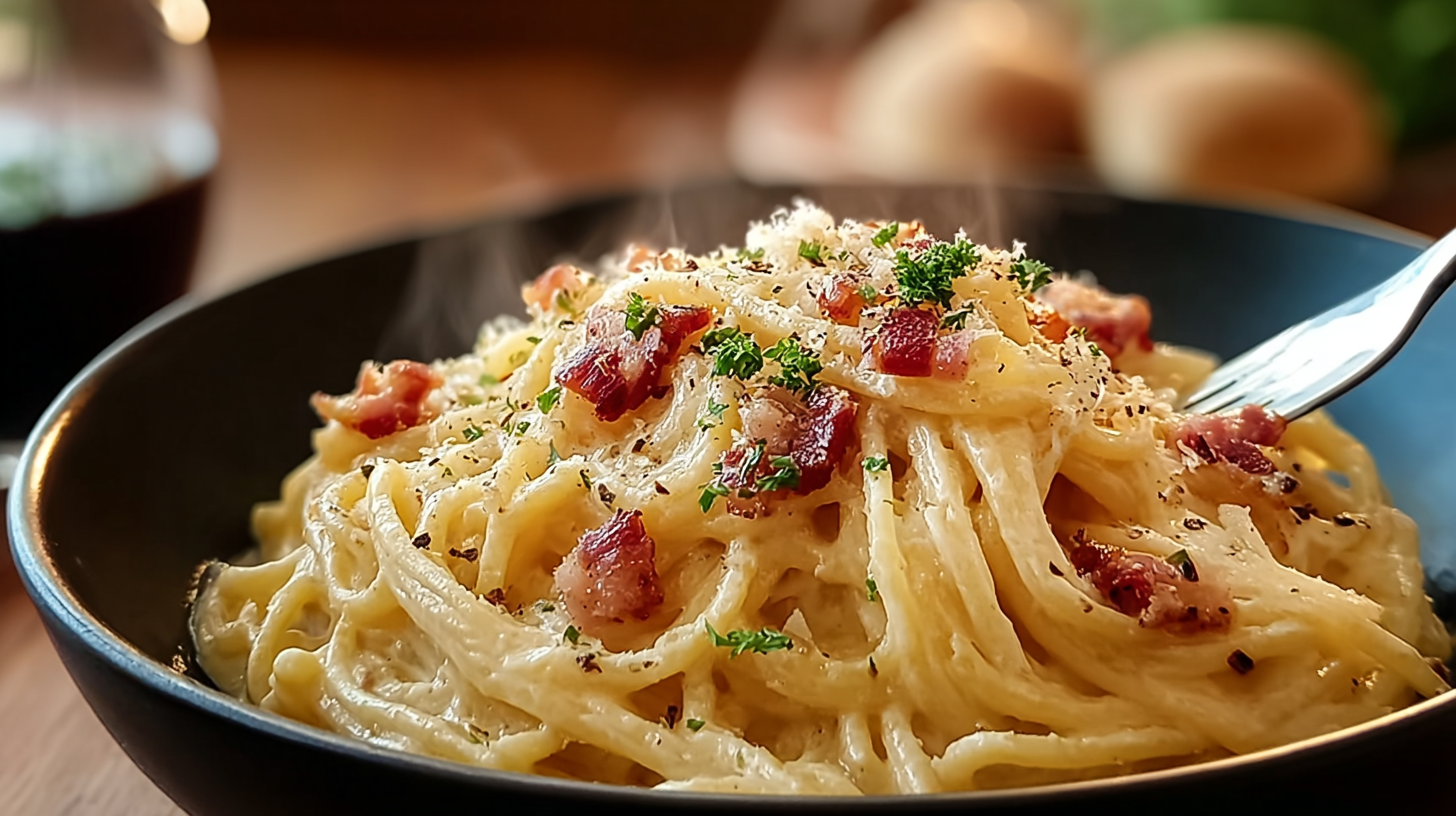
Bacon Carbonara Pasta
Ingredients
Method
- Bring a large pot of salted water to a rolling boil. Add spaghetti and cook until al dente according to package directions. Reserve 1 cup of pasta water before draining.
- While pasta cooks, heat a large skillet over medium heat. Add chopped bacon and cook until crispy, about 6-8 minutes. Transfer bacon to a paper towel-lined plate, leaving about 2 tablespoons of fat in the skillet.
- If using garlic, add it to the skillet and sauté for 30 seconds until fragrant. Remove skillet from heat.
- In a mixing bowl, whisk together eggs, grated Parmesan cheese, and black pepper until well combined.
- Add drained pasta to the skillet with bacon fat (and garlic if added). Toss to coat evenly.
- With heat turned off, quickly pour egg mixture over pasta. Stir vigorously and constantly to create a creamy sauce. Add reserved pasta water, a little at a time, until sauce reaches desired silky consistency.
- Stir crispy bacon pieces back into the pasta.
- Serve immediately, garnished with additional Parmesan and black pepper if desired.
Notes
- Always use room temperature eggs for smoother emulsification
- Turn off heat completely before adding egg mixture to prevent scrambling
- Freshly grated Parmesan works much better than pre-shredded
- Stir constantly when combining eggs and pasta
- Best served immediately while sauce is silky and warm
- Reheat gently in a skillet with a splash of water or milk