

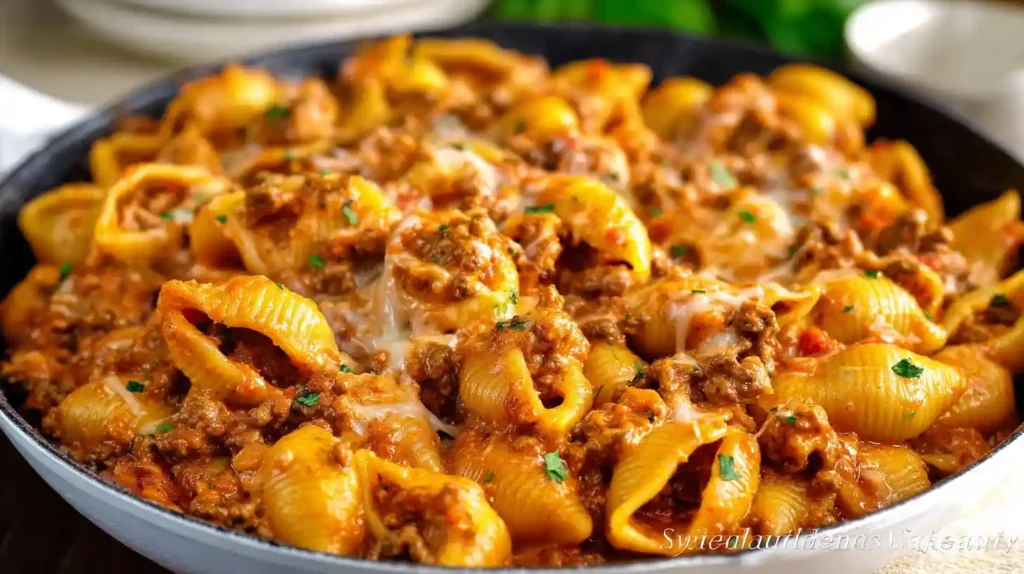
There’s something magical about watching a simple skillet transform into dinner salvation. Last Tuesday, I stood in my kitchen at 6:47 PM—that dangerous hour when hunger meets exhaustion—and I knew I needed something fast but genuinely satisfying. That’s when Creamy Beef and Shells saved me. This isn’t just another pasta recipe; it’s the kind of meal that wraps you in warmth from the first bite, with tender shells catching pools of rich, tangy sauce and savory beef in every spoonful. My kids scraped their bowls clean, and honestly, so did I.
What makes this dish special is how it delivers restaurant-quality comfort without the fuss. You’re building layers of flavor in a single pan—browning beef until it’s deeply caramelized, softening onions and garlic until they’re sweet and fragrant, then bringing everything together with cream, cheese, and just enough tomato to balance the richness. The pasta shells aren’t just a vehicle here; their curved shape becomes little pockets that hold onto every bit of that luscious sauce. I’ve made this countless times now, tweaking and perfecting, and I’m excited to share exactly how it comes together.
Why This Recipe Works
The secret to perfect Creamy Beef and Shells lies in the technique. You’re not just throwing ingredients together—you’re creating depth. When you brown the beef properly (not just gray it, but actually brown it), you develop those caramelized bits on the pan bottom. Then the flour comes in to thicken everything naturally, coating the beef and absorbing all those drippings. The stock loosens it up while the marinara adds acidity to cut through the cream. It’s a balance that took me a few tries to nail, but once you understand the rhythm, it becomes second nature.
I love that this works as both a quick weeknight solution and something special enough for guests. The timing is forgiving too—if your pasta finishes early, just toss it with a little oil and set it aside. The sauce can wait a few minutes without breaking. That flexibility matters when you’re juggling kids, phone calls, or just life in general.
Choosing Your Beef
Ground beef comes in different ratios, and it actually matters here. The 80/20 blend (that’s 80% lean, 20% fat) gives you the best results for Creamy Beef and Shells. It has enough fat to stay juicy and flavorful but not so much that you’re swimming in grease. I tried the 70/30 once—big mistake. Way too oily, even after draining. The 90/10 extra lean worked in a pinch but tasted a bit flat, like something was missing.
When I brown the beef, I leave about a tablespoon of fat in the pan after draining. That’s where the flavor lives. Everything else gets poured off into a jar (never down the sink—trust me on that plumbing lesson). If you’re using leaner beef, you might want to add a touch more olive oil later to keep things silky.
The Pasta Situation
Here’s something I learned the hard way: don’t fully cook your shells. Stop them about two minutes before the package says they’re done. They’ll finish cooking in the sauce, and if they’re already tender when you add them, they’ll turn mushy. Nobody wants mushy pasta. I check mine constantly starting at the seven-minute mark, fishing out a shell and biting into it. When there’s still a tiny bit of firmness in the center—that’s your moment.
Salt your pasta water generously. It should taste like the ocean, my grandmother used to say. This is your only chance to season the pasta itself, and under-salted pasta makes the whole dish taste flat even if your sauce is perfect.
Building the Sauce
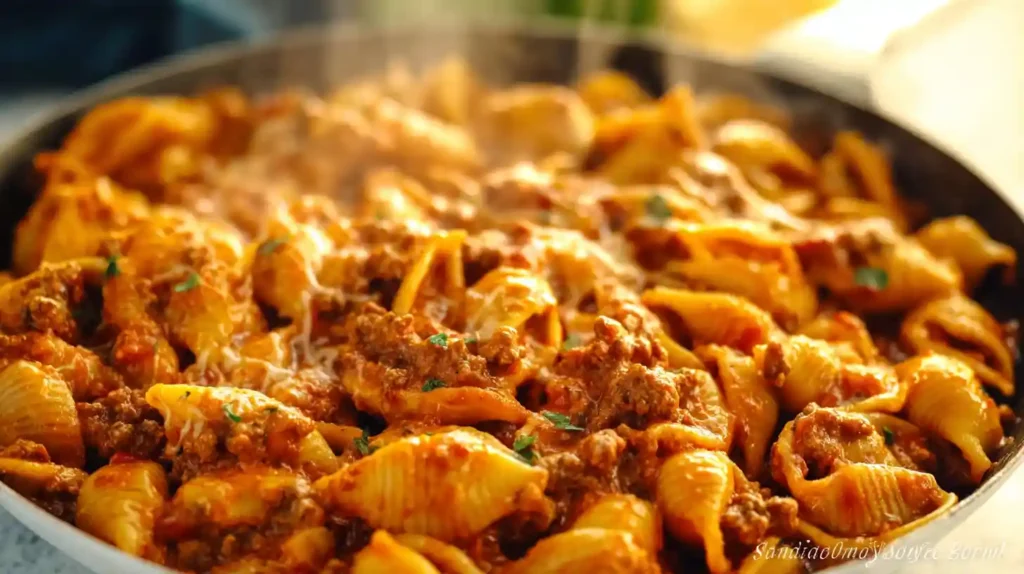
After the beef is browned and set aside, the onions go in. They need about three minutes to soften and turn translucent—you’ll smell the sweetness developing. Then garlic joins for just a minute (any longer and it burns, turning bitter). The flour gets whisked in next, and this is where some people panic. It looks thick and paste-like. That’s exactly right. Let it cook for a full minute, stirring constantly, until it smells toasty and turns a shade darker.
Pour in your stock slowly while whisking. It’ll seize up at first, looking lumpy and wrong, then suddenly smooth out into this glossy base. The marinara comes next with all your dried herbs—Italian seasoning, parsley, oregano, and a little smoked paprika for depth. I let this simmer for about eight minutes, watching it reduce and thicken. You want it saucy but not watery. If a spoon dragged through it leaves a trail that slowly fills back in, you’re there.
Bringing It Together
This is the satisfying part. The cooked pasta goes into the sauce along with the beef. Stir it gently—shells can break if you’re too aggressive. Then comes the heavy cream, turning everything luscious and coating each piece. Taste it now and adjust your salt and pepper. The sour cream folds in next, adding tang and extra body. Finally, the shredded cheddar gets stirred through until it melts into stretchy, golden perfection.
Serve this immediately while it’s hot and the cheese is still gooey. I usually keep the skillet on the lowest heat setting and bring it straight to the table. There’s something wonderful about everyone serving themselves from the same pan—it feels communal and cozy.
Pro Tips From My Kitchen
- If your sauce looks too thick after adding the pasta, splash in extra marinara or a bit more stock to loosen it up
- Freshly grated cheese melts smoother than pre-shredded—the anti-caking agents in bagged cheese can make the sauce grainy
- Let the beef sit undisturbed for the first two minutes of browning to develop a real crust
- Room temperature sour cream incorporates more easily than cold—take it out of the fridge when you start cooking
- A pinch of red pepper flakes in the sauce adds subtle warmth without obvious heat
Variations Worth Trying
Once you’ve mastered the basic Creamy Beef and Shells, the variations become fun. I’ve swapped ground beef for Italian sausage (remove the casings first), which adds fennel and garlic notes without extra work. Ground turkey works too, though you’ll want to add a tablespoon of butter for moisture. For vegetables, diced bell peppers or sliced mushrooms can go in with the onions—just give them enough time to soften completely.
Cheese-wise, I’ve experimented with smoked gouda, pepper jack, and even a blend of mozzarella and parmesan. Each changes the character of the dish. The pepper jack version became a family favorite on taco night. You can also use different pasta shapes—cavatappi, rigatoni, or elbow macaroni all work. Just keep that cook-it-less-than-package-directions rule.
Troubleshooting Common Issues
Sauce Too Thin
Let it simmer longer before adding the pasta. If it’s already combined, mix a teaspoon of cornstarch with cold water and stir it in, then simmer for two minutes. The sauce will tighten up as it cools slightly too, so don’t panic if it looks loose right off the heat.
Sauce Too Thick
Thin it with warm stock or extra marinara, adding a few tablespoons at a time. Pasta absorbs liquid as it sits, so this is common if you’re making it ahead or reheating leftovers.
Cheese Turned Grainy
The heat was too high when you added it. Cheese needs gentle warmth to melt smoothly. If this happens, lower the heat immediately and stir in a splash of cream to try bringing it back together.
Pasta Turned Mushy
It was cooked too long initially. There’s no fix for this batch, but remember it for next time—pull the pasta when it still has bite.
Smart Substitutions
- No sour cream? Use cream cheese (soften it first) or full-fat Greek yogurt
- Out of marinara? Crushed tomatoes with a teaspoon of tomato paste and extra Italian seasoning works
- Skip the beef stock and use chicken or vegetable stock instead
- For a gluten-free version, use gluten-free pasta and replace all-purpose flour with cornstarch (use half the amount)
- Dairy-free cashew cream can replace heavy cream if you blend soaked cashews with water until smooth
Storing and Reheating
Leftovers keep in an airtight container in the fridge for up to three days. The pasta will soak up sauce as it sits, so I always add a few splashes of stock or cream when reheating. Microwave portions work fine—cover them and heat in 90-second intervals, stirring between. For stovetop reheating, use low heat and stir frequently to prevent sticking.
Freezing is possible but not ideal since the dairy can separate when thawed. If you want to freeze it, slightly undercook everything and freeze in portions. Thaw overnight in the fridge, then reheat gently on the stove, adding extra cream to bring the texture back. I’ve found it’s better to freeze the sauce separately and cook fresh pasta when you’re ready to eat.
What to Serve Alongside
Creamy Beef and Shells is rich and filling, so I pair it with lighter sides. A simple green salad with vinaigrette cuts through the richness beautifully. Garlic bread is always popular, though it makes the meal heavier. Roasted vegetables like broccoli, green beans, or Brussels sprouts add color and texture contrast. Sometimes I just serve it with crusty bread for soaking up extra sauce and call it dinner.
Frequently Asked Questions
Can I make this ahead of time?
You can prep the sauce up to the point before adding dairy, then refrigerate it for a day. When ready to serve, warm the sauce, cook fresh pasta, then combine everything and add the cream, sour cream, and cheese. Making it completely ahead works but the pasta texture suffers.
What’s the best cheese for this?
Sharp cheddar gives the most flavor, but mild cheddar works if you prefer less tang. A Mexican blend or Monterey Jack creates a different but delicious profile. Avoid pre-shredded cheese if possible—freshly grated melts more smoothly.
Can I use a different pasta shape?
Absolutely. Any short pasta with ridges or curves works well for holding sauce. Penne, rotini, cavatappi, and even bow ties are all good options. Just adjust cooking times based on package directions.
Is there a way to make this lighter?
Use ground turkey or chicken instead of beef, swap heavy cream for half-and-half, and reduce the cheese slightly. You can also bulk it up with extra vegetables like spinach, zucchini, or bell peppers to stretch the portions without adding heaviness.
Why does my sauce separate?
Usually this happens from too-high heat after adding dairy. Keep the temperature at medium-low once the cream and sour cream go in. If you’re reheating leftovers, add a splash of milk or cream and warm it gently while stirring constantly.
Can I double this recipe?
Yes, but you’ll need a very large skillet or do it in batches. The pasta especially needs room to combine with sauce properly. I’ve successfully doubled it using my biggest 14-inch pan. Everything else scales up proportionally.
How do I prevent the pasta from sticking together?
Make sure your pasta water is at a rolling boil and stir the shells occasionally during the first few minutes of cooking. After draining, toss them immediately into the sauce. If you need to hold them, toss with just a tiny bit of the sauce rather than oil.
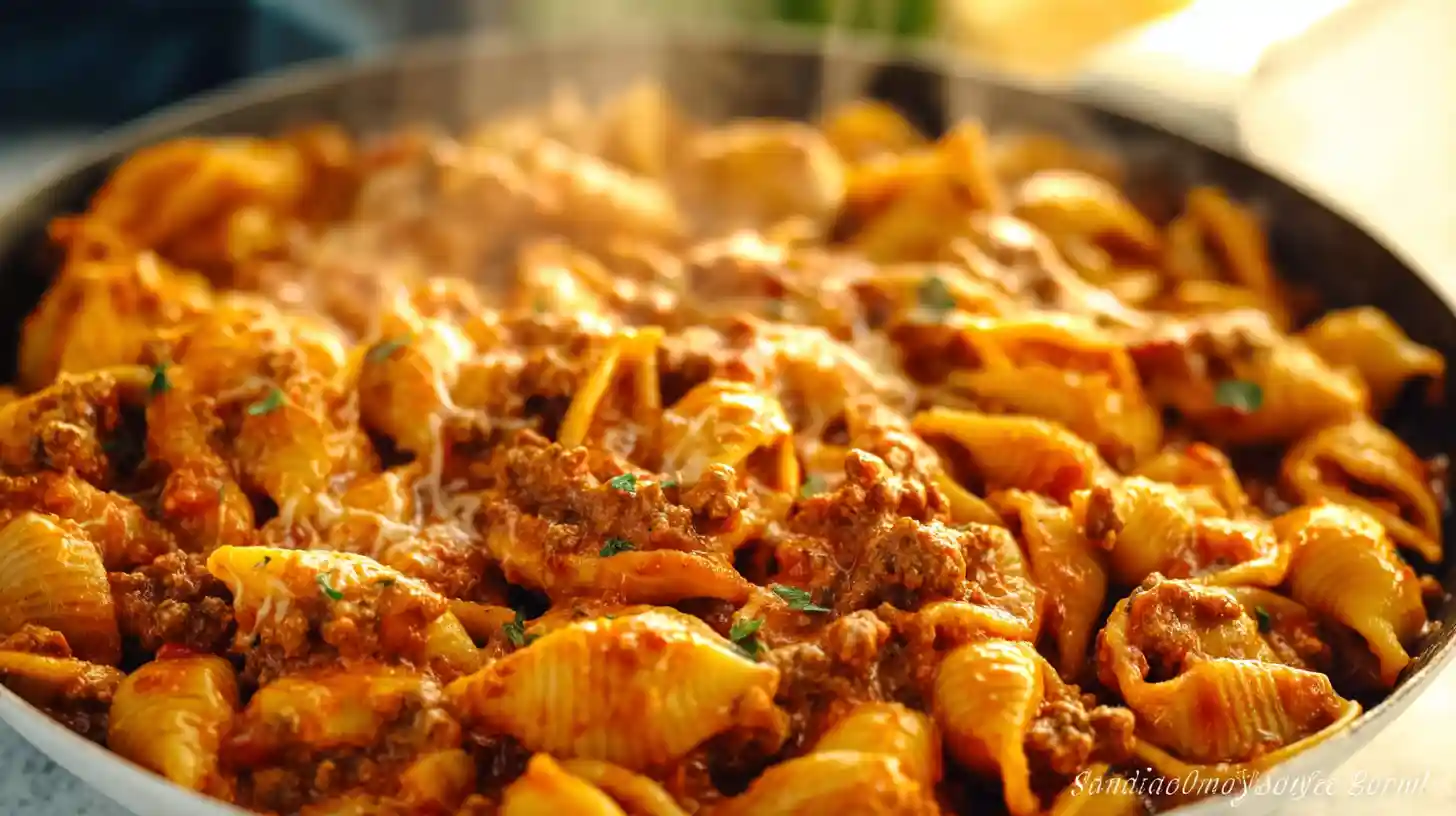
Creamy Beef and Shells
Ingredients
Method
- Bring a large pot of salted water to a rolling boil. Add the pasta shells and cook for 2 minutes less than the package directions indicate (they should still be slightly firm). Drain well and set aside.
- While pasta cooks, heat olive oil in a large skillet over medium-high heat. Add ground beef and cook for 4-6 minutes, breaking it apart with a wooden spoon, until deeply browned. Drain excess fat, leaving about 1 tablespoon in the pan. Transfer beef to a plate.
- In the same skillet over medium heat, add diced onion and cook for 3 minutes, stirring often, until softened and translucent. Add minced garlic and cook for 1 minute until fragrant.
- Sprinkle flour over the onion mixture and whisk constantly for 1 minute until the flour turns slightly golden and smells toasty.
- Slowly pour in the beef stock while whisking continuously to prevent lumps. The mixture will thicken. Add marinara sauce, Italian seasoning, dried parsley, oregano, and smoked paprika. Stir well to combine.
- Bring the sauce to a gentle boil, then reduce heat to medium-low. Simmer for 7-9 minutes, stirring occasionally, until the sauce has reduced and thickened enough to coat the back of a spoon.
- Return the cooked beef to the skillet along with the drained pasta shells. Stir gently to combine everything evenly.
- Pour in the heavy cream and stir until heated through, about 2 minutes. Taste and season with salt and black pepper as needed.
- Remove from heat and fold in the sour cream until smooth and creamy.
- Add the shredded cheddar cheese and stir gently until melted and silky, about 1-2 minutes. Serve immediately while hot, garnished with fresh parsley if desired.