Ingredients
Equipment
Method
- If using fresh bread, cut it into 1.5 to 2-inch thick slices and leave uncovered at room temperature for 2-3 hours to dry slightly, or toast in a 250°F oven for 10 minutes. Day-old bread can be used immediately.
- In a large shallow dish (9x13-inch baking dish works perfectly), whisk together 6 egg yolks until smooth and uniform in color with no streaks remaining.
- Add heavy cream, whole milk, 3 tablespoons granulated sugar, vanilla extract, cinnamon, nutmeg, and salt to the egg yolks. Whisk vigorously for a full minute until completely combined and slightly frothy with no egg yolk streaks visible.
- Pour 1/2 cup granulated sugar into a shallow plate or pie dish for the coating station. Set this near your cooking area for easy access.
- Using a sharp serrated knife, cut the challah or brioche loaf into 1.5 to 2-inch thick slices. You should get 6-8 substantial slices from a standard loaf.
- Preheat your oven to 200°F and place a baking sheet inside. This will keep finished French toast warm while you cook in batches.
- Place one bread slice in the custard mixture. Let it soak for 30-45 seconds, then gently flip and soak the second side for another 30-45 seconds. The bread should absorb custard throughout but not fall apart. Thicker slices need the full soaking time.
- Lift the soaked bread slice carefully, letting excess custard drip off for a moment. Immediately press both sides of the wet bread into the sugar coating plate, creating a generous, even layer of sugar on both surfaces.
- Heat a large nonstick skillet or griddle over medium heat. Add 1 tablespoon butter and 1 tablespoon neutral oil. The combination prevents burning while providing flavor.
- Once butter melts and foam subsides, carefully place sugar-coated bread slices in the pan. Don't crowd them—work in batches if your pan can't fit all slices with space between them.
- Cook without moving for 3-4 minutes. You'll hear active sizzling as the sugar caramelizes. The toast is ready to flip when you see deep golden-brown caramelization and can slide a spatula underneath easily.
- Flip carefully using a wide spatula to support the entire slice, preventing breaking. Cook the second side for another 3-4 minutes until equally caramelized with deep golden color.
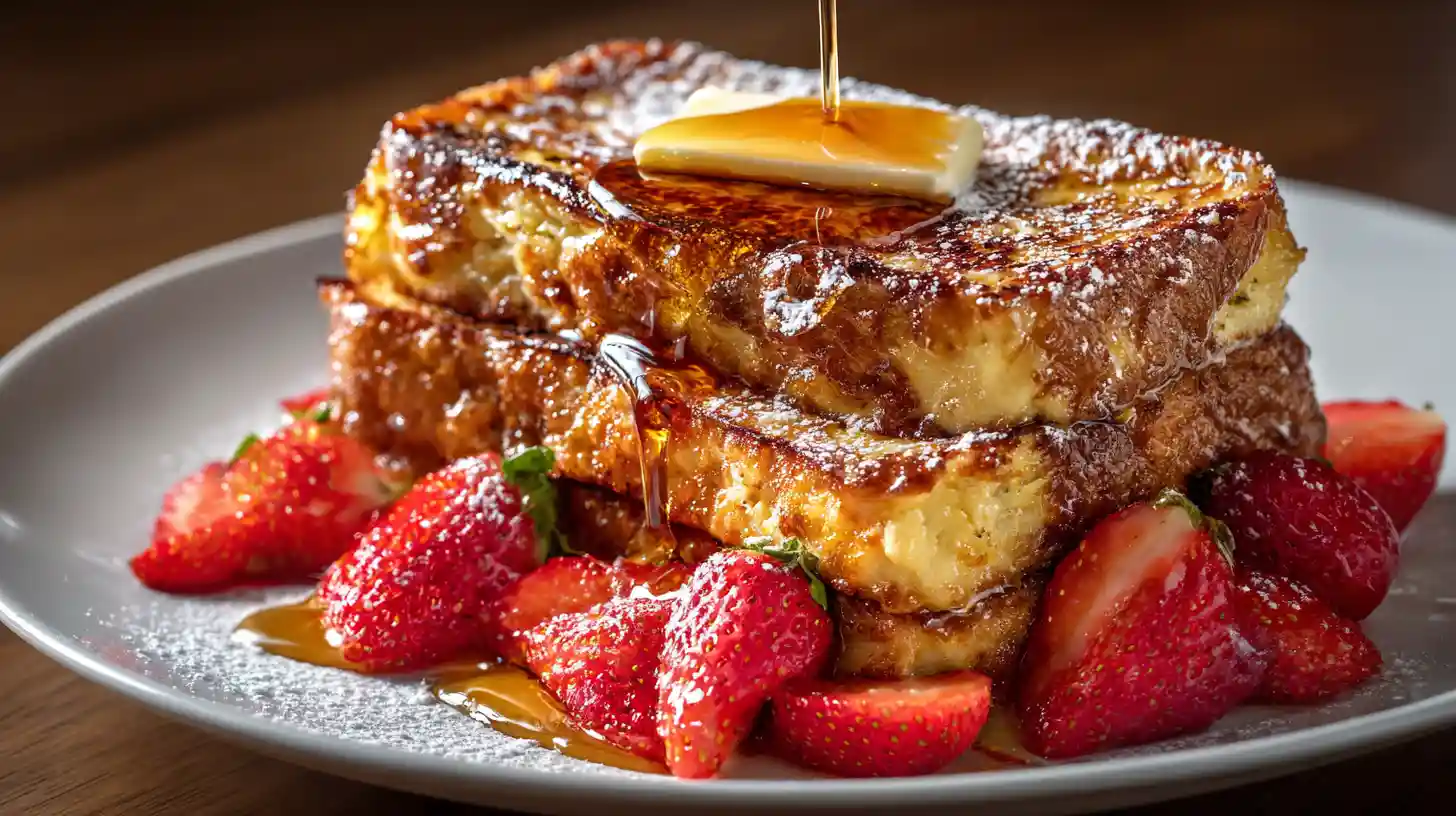
- The finished French toast should be deeply golden with visible caramel coloring and a slightly crispy texture on the outside. The interior should feel set but still have some give when gently pressed.
- Transfer finished slices to the baking sheet in the warm oven while you cook remaining batches. This keeps them warm and crispy without overcooking.
- Between batches, wipe out any burnt sugar bits from the pan with a paper towel. Add fresh butter and oil before cooking the next batch to maintain consistent results.
- Repeat the soaking, coating, and cooking process with remaining bread slices, maintaining medium heat throughout to ensure proper caramelization without burning.
- Once all slices are cooked, remove from oven and let rest for 1-2 minutes. This brief rest allows the custard to set slightly for easier cutting and eating.
- Serve immediately topped with a pat of butter, a generous dusting of powdered sugar, and warm pure maple syrup. Add fresh berries and whipped cream if desired for extra indulgence.
Notes
Pro Cooking Tips
- Temperature Control is Critical: Medium heat is perfect—too high burns the sugar before cooking the center; too low creates pale, soggy toast without caramelization.
- Fresh Oil Between Batches: Wipe the pan clean and add fresh butter/oil between batches to prevent burnt bits from previous cooking from affecting flavor.
- Don't Oversoak: Even thick slices shouldn't soak more than 90 seconds total or they'll become too fragile to handle and may fall apart when lifted.
- Support When Flipping: Use your entire spatula surface to support the slice's weight—custard-soaked bread is delicate until fully cooked through.
- Listen for the Sizzle: That active, steady sizzling sound means the sugar is caramelizing perfectly. Silence means heat is too low.
- Day-Old Bread Works Best: Slightly stale bread absorbs custard better without becoming soggy. Fresh bread should be dried out first.
- Yolks Only: Don't be tempted to add whites—they create eggy flavor and thinner custard that defeats the luxury of this recipe.
Delicious Variations
- Orange Cream French Toast: Add 2 tablespoons orange zest to custard and serve with orange-honey butter for bright citrus flavor.
- Almond Joy Style: Use 1 teaspoon almond extract instead of vanilla, top with toasted coconut and chocolate drizzle.
- Pumpkin Spice Version: Mix 1/4 cup pumpkin puree into custard with pumpkin pie spices for fall breakfast perfection.
- Banana Foster Topping: Top with caramelized bananas cooked in butter, brown sugar, and rum for New Orleans flair.
- Stuffed French Toast: Cut a pocket in each slice and fill with sweetened cream cheese or Nutella before soaking.
- Eggnog French Toast: Replace heavy cream with eggnog during holidays for festive twist with extra spice.
- Churro Style: Add extra cinnamon to sugar coating and serve with warm chocolate sauce for dipping.
- Lemon Mascarpone: Top with lemon-sweetened mascarpone and fresh berries for elegant brunch presentation.
Storage & Reheating
Refrigerator: Store leftover French toast in an airtight container for up to 3 days. Separate slices with parchment paper to prevent sticking. The caramelized crust will soften but remains delicious. Freezer: Freeze cooked slices individually on a baking sheet until solid, then transfer to freezer bags for up to 2 months. Thaw overnight in refrigerator before reheating. Best Reheating: Reheat in a 350°F oven for 8-10 minutes to restore crispness. Avoid microwaving which creates soggy texture. For frozen slices, reheat straight from freezer for 12-15 minutes. Make-Ahead Custard: Prepare custard up to 24 hours ahead and refrigerate covered. Whisk well before using as ingredients may separate slightly.Bread Selection Guide
- Best Choice: Challah bread provides ideal texture—tender, eggy, slightly sweet, and absorbs custard beautifully without falling apart
- Runner-Up: Brioche offers even more buttery richness with high egg and butter content for decadent results
- Budget Option: Thick-cut Texas Toast or soft white bread works in a pinch though texture won't be as luxurious
- Avoid: French bread, baguettes, sourdough, or crusty artisan breads—too chewy and don't soften properly
- Thickness Matters: Always cut 1.5 to 2-inch thick slices for proper crispy-to-creamy ratio. Pre-sliced bread is too thin.